
Blog Standards
Marketing Automation in 2026: Why Smarter Systems Are Changing the Way Marketers Work
Table of content
Introduction
What Marketing Automation Means in 2026
Key Shifts Reshaping the Work
1. From rules to predictions. Older workflows followed fixed “if this, then that” rules. Newer systems use predictive lead scoring to prioritize who is most likely to buy.
2. Personalization at scale. Instead of segmenting into five groups, marketers can tailor messages to individual behavior, such as pages viewed, products abandoned, and past purchases.
3. First-party data focus. With privacy regulations like GDPR and CCPA, and the decline of third-party cookies, brands rely on data customers share directly. Automation platforms are built around consent and clean data collection.
4. Unified analytics. Google Analytics 4 (GA4) and platform dashboards feed attribution models that show which touchpoints actually drive revenue.
5. Faster content operations. Generative AI speeds up drafting, repurposing, and testing, while humans keep control of strategy, brand voice, and accuracy.
Leading Marketing Automation Platform to Know in 2026
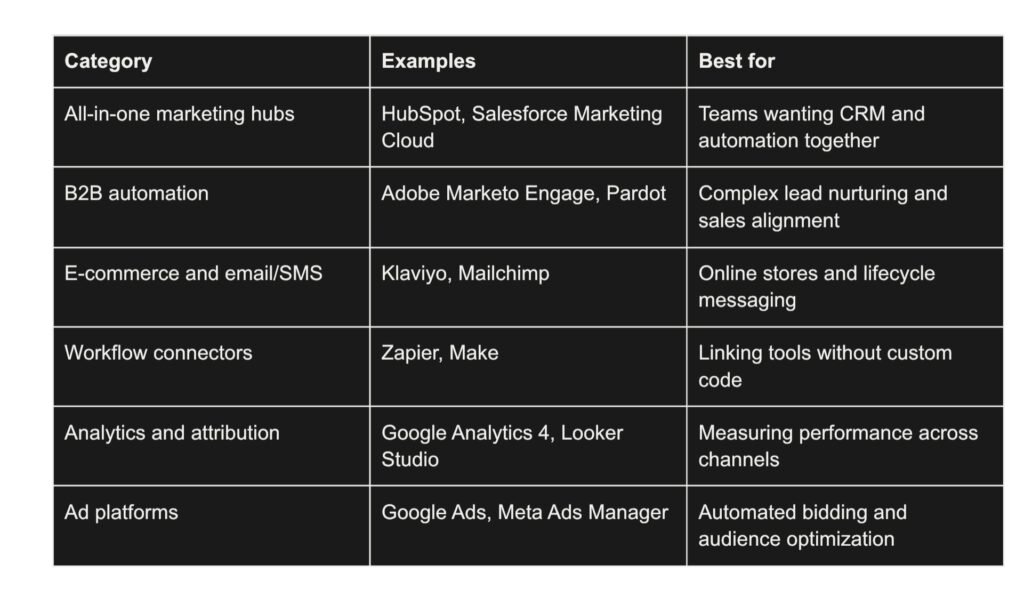
The best tool depends on your team size, budget, and existing tech stack. Integration quality matters more than feature lists.
How Marketer's Roles Are Changing
Automation isn’t replacing marketers; it is reallocating their time.
• Less: manual list pulls, scheduling, and routine reporting.
• More: strategy, creative direction, experimentation, data interpretation, and customer research.
New skills are in demand: marketing operations (MOps), workflow design, data literacy, prompt writing, and privacy compliance. Marketers who understand both the creative system side are becoming the most valuable on the team.
Challenges and Risks
• Poor data quality. Automation amplifies bad data. Duplicate or outdated contacts lead to irrelevant messages.
• Over-automation. Customers notice when communication feels robotic. Keep human touchpoints where trust matters.
• Tool sprawl. Too many disconnected platforms create silos and rising costs.
• Compliance gaps. Mishandling consent can bring legal and reputational damage.
• Blind trust in AI. Outputs still need human review for accuracy and brand fit.
How to Get Started With Marketing Automation in 2026
1. Audit your current process. List repetitive tasks that eat the most time.
2. Clean your data. Remove duplicates, standardize fields, and confirm consent.
3. Start with one workflow. A welcome series or abandoned-cart flow is a good first project.
4. Define success metrics. Choose measurable goals, such as conversion rate, revenue per email, or lead response time.
5. Test and refine. Run A/B tests and review results monthly.
6. Scale gradually. Add channels and complexity once the basics perform.
FAQ
What is marketing automation?
It is software that automates repetitive marketing tasks like emails, social posts, lead scoring, and campaign reporting, freeing teams to focus on strategy.
Is marketing automation in 2026 worth it for small businesses?
Yes, if you start small. Affordable tools can automate email follow-ups and lead capture without a large team.
Will AI replace digital marketers?
Unlikely. AI handles repetitive and analytical tasks, but people are still needed for strategy, creativity, and relationships.
What is the difference between a CRM and a marketing automation platform?
A CRM stores and manages customer relationships and sales activity. A marketing automation platform runs campaigns based on that data. Many tools combine both.
How do I measure marketing automation success?
Track conversion rate, lead-to-customer rate, email engagement, customer lifetime value, and time saved.
How does privacy law affect automation?
Regulations like GDPR and CCPA require clear consent, easy opt-outs, and responsible data handling. Choose platforms with built-in compliance features.
About the Author
Farha Eranchikkal — THE BRANDEDITS MARKETING
Farha has a foundation in digital marketing from CDA Academy and an interest in helping businesses strengthen their online presence through strategic marketing and creative content. Through BRANDEDITS Marketing, she explores digital marketing strategies, content creation, SEO, and emerging industry trends to help brands build meaningful connections with their audiences.

Conclusion
Marketing automation in 2026 is creating new opportunities for businesses to connect with customers and grow online. By combining AI-powered tools, personalisation, and clean data, brands can build a stronger digital presence.
The most important step is to start with a clear goal, understand your audience, and continuously improve your approach using real performance data. Trends may change, but delivering genuine value to customers will always matter.
Want to explore more practical marketing tips and strategies? Visit THE BRANDEDITS MARKETING for more insights.
Continue exploring: Visit the THE BRANDEDITS MARKETING homepage